



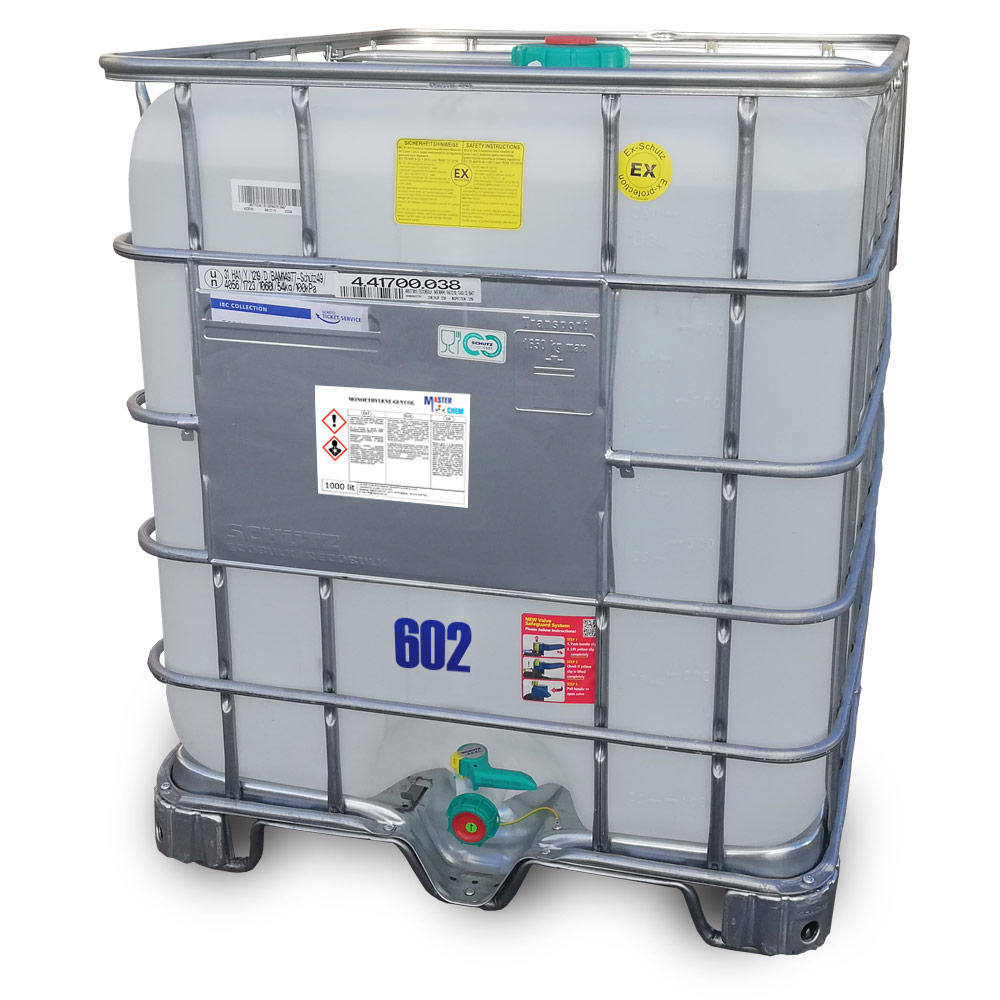
MasterChem Ethylene glycol is a popular heating medium with low freezing points. It is available in the form of water-glycol solutions of various concentrations, ready-to-use, or in the form of a concentrate requiring preliminary dilution.
Depending on the expected operating conditions, a reagent with a certain freezing point is selected. If you bought a ready-made water-glycol solution with a low concentration (20-35%) and its frost resistance meets the requirements of the system, then you do not need to dilute it.
If a concentrate or solution with a basic substance content of more than 40% is selected, it is recommended to dilute it before use. High concentrations of antifreeze are suitable only for the conditions of the Far North; in milder climates, dilution of the composition will be required.
Ethylene glycol: how to dilute?
The reagent should be diluted with distilled or soft water with a minimum amount of impurities (especially calcium and magnesium salts). Otherwise, hardness salts will lead to the formation of sludge, which negatively affects the cooling or heating system.
If the coolant contains anti-corrosion additives, then it is allowed to be diluted with water with a hardness not exceeding 5 mg / eq. In this case, the liquid must settle before being added to the system.
Manufacturers do not recommend pouring undiluted ethylene glycol-based antifreeze into heating or cooling systems: it has a high viscosity, which deteriorates the circulation of liquid in the pipes. In addition, it has a low heat capacity, and this drawback must be corrected by adding water.
The optimum temperatures at which the diluted reagent begins to freeze are considered to be -25 ° C or -30 ° C, for double-circuit boilers -20 ° C. For greater convenience, the table below will help determine how to dilute ethylene glycol:
| Temperatore Crystallization | Etylenglycole (l) | Water (l) |
| -20 ° C | 54 | 60 |
| -25 ° C | 60 | 40 |
| -30 ° C | 65 | 35 |
| -40 ° C | 77 | 23 |
The proportions should be determined in advance and filled with water and antifreeze separately. The filling of these fluids must be carried out in small portions one by one until the required pressure level in the system is obtained.
There is another way – filling the pipes with an already diluted coolant through the drain valve using a vibration pump. In this case, the reagent is mixed with water in the required proportions in a special container.
We will always help you calculate the volume of the required solution based on the pipe diameter and length.
Description:
Application and use:
Physical properties:
Precautionary measures:
Antifreeze is very toxic, so its use is recommended only for closed circuit designs. Application in double-circuit boilers can lead to the penetration of the coolant into the hot water supply system.
When pouring the material, it is necessary to use personal protective equipment: a mask, rubber gloves and goggles. During operation, it is necessary to completely exclude human interaction with the coolant.
Do not use the reagent as a heat carrier in places accessible to small children. Due to its sweet taste and lack of unpleasant odor, it can attract their attention, and the consequences can be dire.
If antifreeze leaks, replace all elements that have gotten into ethylene glycol, as they will subsequently become sources of toxic fumes.